So yeah. The title says it all. Mega March did not go as planned. I knew my goals were lofty, but wow. I so didn't get as much done as I thought.
But that doesn't mean I did nothing. I did more research and organized my research notes (which was awesome), I outlined the first couple of chapters, and I even spontaneously wrote half of the first chapter one night. So that's something. I haven't sat down and pumped out a night of writing like that in a while, and it was fun to remember what it feels like. It IS fun, and more ideas come as I go. I need to remember that when my ideas start to run dry. I feel like it's been so long since I've really worked on LITTLE SUN that I don't remember how to do it anymore. But this half chapter reminded me.
So all was not lost. But there's plenty more to do. Here's to Awesome April.
Showing posts with label tasks of writing. Show all posts
Showing posts with label tasks of writing. Show all posts
Thursday, April 4, 2013

Thursday, February 21, 2013
When the planets align
When I was finishing up the first draft of LITTLE SUN, I knew it still needed something. Since I had never written a book before, it took me a while to realize that, to begin with, I was a fairly bare-bones kind of writer. I wrote generally what happened and that was about it, kind of like a very thorough outline in prose form with some dialogue. I needed to add what often makes a book a book—the imagery. So one of my tasks was to go back through each chapter and flesh it out a little and describe this and that, sometimes what people were wearing, sometimes what they were doing, sometimes a look they had on their face. I don't like too much description, especially about the scenery or anything too flowery, but you need just enough so the picture you are painting is more easily imagined.
It was about this time that I started reading a book called The Garden by Elsie V. Aidinoff. It tells the story of Adam and Eve, God, and the serpent and all they go through in the garden, mostly from Eve's perspective and from a very different angle. There were a lot of things I didn't like about the story (one being how the serpent is Eve's mentor), but there were several elements I found fascinating. One in particular was how the author portrayed Eve's first experience with everything. The minute I opened the book, I felt caught up in the description and like I, along with Eve, was experiencing what it was like to feel and see and have a body for the first time.
Anyway, the planets had aligned and it was perfect timing to read something with excellent imagery. Even though this kind of writing isn't really my style, it still helped me learn just when I needed it. Not only does reading something like this give you good ideas about new techniques and all that, but once you do it enough or become entrenched in it, it helps you start thinking that way, and the process comes easier and more natural.
“The Beginning”
Something heavy on my center, smooth against my skin, shifting very slightly within itself, stretched and retracted, occasionally a tap to the side, always in the same spot. I breathed. Instantly the thing was still. I let out the air. Again I inhaled, deeply, and pushed against the heaviness as I filled my chest. The thing began to move. Slowly, stopping and starting, it wound back and forth across my thing, around my knee, down my leg. it slid over my ankle, passed gently by my heel, with a little touch to my instep along the way. There was a wish. Again, silence and dark. I felt light, unburdened, empty, as if I might float away. Soft things swept my face, my cheek, my ear, wafted across my nose. My hands rose from my sides and brushed them off. There was a tickle in my nose. I gasped, gasped again. A great noise burst from my mouth. My eyelids jerked open. And I saw.
At first there was only blue, limpid and luminous, stretching wide above me. A white, fluffly mass appeared, scudded across the expanse, tumbled into pieces, and melted into the blue. I lifted my arms, spread my fingers. light came through them; the ends glowed pink. I curled a finger into my palm and felt it scratch the skin. On my arms fine hairs glimmered in the sunlight. Still lying flat, I turned my head to one side. Not far away several forms, tall and dark and topped with green fluff, stretched toward the sky. Scattered around me and floating through the air were weightless bits of pink, turned up around the edges: blossoms falling from trees; it was one of them that had tickled my nose....
That first day, of course, I didn’t not know it was the sky I saw, the wind that moved my hair, an apple tree that shed pink petals on my toe. Cloud, face, blossom: all were unknown. I had no knowledge, no words. Each time I turned my head and found, before my eyes, something I had not seen, the world expanded.
From The Garden by Elsie V. Aidinoff
Kind of like how I felt like my humor reached new heights when I watched all 10 seasons of Friends back-to-back while nursing during Anna's first year. Maybe my time could have been more productively spent, maybe not.
Thursday, January 3, 2013
A Survey: Adult Voice vs. YA Voice
I am currently in the middle of trying to find an agent who wants to sell my manuscript of LITTLE SUN to a publisher. I started querying in late October, and, though I took a big long break over the holidays, I haven't had any takers yet. A couple responses have been form letters, but others have been personal and kind and even encouraging.
But one agent in particular was concerned that it is the mother's voice that begins LITTLE SUN in the prologue (the story is told from dual points of view) and thought we should first hear from the 15-year-old daughter (who starts Chapter 1). She said it is young adult fiction, after all. At first I disagreed, thinking that it wouldn't have mattered to me when I was a teenager (and thinking it ridiculous that my masterpiece could actually be improved upon), but then I really considered it and decided to rewrite the prologue a bit to see how I felt. And I still don't know.
In the rewrite, the mother's voice still begins the book because I think it's important to start with the accident, but I shortened the prologue and took out the part about the daughter's birth so that we could get to her voice sooner. I really started to wonder if I only liked the part about her birth because I'm a mother and if maybe YA readers would, in fact, find it less accessible. The removal of the part about the daughter's birth is pretty much the only change.
And I still don't really know how I feel about it, so I thought I would put the question to you. You can answer in theory, about if this kind of thing in books matters to you (or mattered when you were younger), if it would or would not have been off-putting, or you can read for yourself. I made two new pages where you can read each version of the prologue and the first chapter:
So please let me know what you think. I will appreciate any and all feedback. But if nothing else, maybe you can at least enjoy the sneak peak.
Thursday, December 13, 2012
Writing gets harder
This quote from author Keith Ridgway (via Nathan Bransford) has been on my mind, lately:
When I was finally finished with the first real draft of LITTLE SUN, this is pretty much how I felt. The part about how a book is something "whittled down from hope," the part about how a book just happens, the part about feeling like you're emerging from a car crash—basically everything. He nailed it.
And knowing that Ridgway said this after he had written six books doesn't make me feel that much better, frankly, since I've only written 1.3 books. (A draft of a children's book + semi-begun plans for a middle grade novel = .3, by the way, in case you were unfamiliar with literary math.) So Book 1 was hard, but learning that it only gets harder? Awesome.
But for some reason, it's worth it. For some reason, I feel compelled, even driven, to continue to write books. I don't know all of the reasons why. I know some of them, but not all. Much of the whole thing still remains a mystery. And I guess that's one of the reasons that continue to drive me—a need to solve this mystery. So that I will do: continue.
I’ve written six books now, but instead of making it easier, it has complicated matters to the point of absurdity. I have no idea what I’m doing. All the decisions I appear to have made—about plots and characters and where to start and when to stop—are not decisions at all. They are compromises. A book is whittled down from hope, and when I start to cut my fingers I push it away from me to see what others make of it. And I wait in terror for the judgements of those others—judgements that seem, whether positive or negative, unjust, because they are about something that I didn’t really do. They are about something that happened to me. It’s a little like crawling from a car crash to be greeted by a panel of strangers holding up score cards.
When I was finally finished with the first real draft of LITTLE SUN, this is pretty much how I felt. The part about how a book is something "whittled down from hope," the part about how a book just happens, the part about feeling like you're emerging from a car crash—basically everything. He nailed it.
And knowing that Ridgway said this after he had written six books doesn't make me feel that much better, frankly, since I've only written 1.3 books. (A draft of a children's book + semi-begun plans for a middle grade novel = .3, by the way, in case you were unfamiliar with literary math.) So Book 1 was hard, but learning that it only gets harder? Awesome.
But for some reason, it's worth it. For some reason, I feel compelled, even driven, to continue to write books. I don't know all of the reasons why. I know some of them, but not all. Much of the whole thing still remains a mystery. And I guess that's one of the reasons that continue to drive me—a need to solve this mystery. So that I will do: continue.
Thursday, November 15, 2012
Names
Choosing names for characters in my book was an interesting experience because all of them seemed to come about differently. Long before I had a finished manuscript or even a chapter one, I had the first sentence of the book. And I wanted to fit that in with the main character's name, so that's how I got her name. I had a certain idea of what the dad would be like, so I picked a name that seemed to fit. The mother's name was a little more elusive. I tried out a few different names, but none of them seemed right. They sounded fake, which indeed they were, but I wanted them to sound real. Oh, the irony... After a while, I happened upon the right one (after searching popular girls' names from the 1960s when she would have been born, had she been real), and I knew it instantly.
It was an involved process to name the main characters, but sometimes I only needed to come up with a throwaway name for another student we'd never see in the book again. And I wanted those to sound real too. I tried to pick middle-of-the-road names—names that were a little unique, something unlike Bob Johnson, perhaps, but not too unique so that the name detracted from the story, like Petal Kazowsky, for example. Although the more I look at Petal Kazowsky, the more I like it. Maybe I'll use it in another book someday . . .
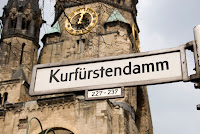 It was this way with place names too. Sometimes I used combinations of names and places that were familiar to me, and sometimes I dreamed something up in my head, only to look it up and see that it was an actual place and the name of several cities across the U.S.—and none of them near me. True story.
Anyway, this is all to say that it was sometimes hard to come up with the right names, names that felt right. For characters, I tried to use different kinds of names: modern, classic, ethnically diverse. And while I was in the thick of writing, I was absolutely fascinated when I came across this supercool map of surnames in an issue of National Geographic.

Here's a link to the NGM blog post about it, where you can also enlarge the map in case you don't have superhuman vision.
Anyway, it's incredibly interesting to me to see how common last names are distributed in the U.S. It shows the countries of origin for the surnames, and you can see patterns of where immigrants from certain countries settled. The article also listed a website that lets you find hot spots for last names around the world: http://worldnames.publicprofiler.org/ You can look up your own, and it's very, very interesting. Frankly, I didn't know Scoresby was of Celtic origin.
So I tore out the map, and now I keep it in my writing stuff because I love it and it's useful to look at if I can't think of last names for my characters. Besides Smith, Johnson, and Miller, there are plenty to choose from.
QUESTIONS: What are some of the best names in literature? What would you say makes a good name? Any names that have bothered you?
It was an involved process to name the main characters, but sometimes I only needed to come up with a throwaway name for another student we'd never see in the book again. And I wanted those to sound real too. I tried to pick middle-of-the-road names—names that were a little unique, something unlike Bob Johnson, perhaps, but not too unique so that the name detracted from the story, like Petal Kazowsky, for example. Although the more I look at Petal Kazowsky, the more I like it. Maybe I'll use it in another book someday . . .

Anyway, this is all to say that it was sometimes hard to come up with the right names, names that felt right. For characters, I tried to use different kinds of names: modern, classic, ethnically diverse. And while I was in the thick of writing, I was absolutely fascinated when I came across this supercool map of surnames in an issue of National Geographic.
Here's a link to the NGM blog post about it, where you can also enlarge the map in case you don't have superhuman vision.
Anyway, it's incredibly interesting to me to see how common last names are distributed in the U.S. It shows the countries of origin for the surnames, and you can see patterns of where immigrants from certain countries settled. The article also listed a website that lets you find hot spots for last names around the world: http://worldnames.publicprofiler.org/ You can look up your own, and it's very, very interesting. Frankly, I didn't know Scoresby was of Celtic origin.
So I tore out the map, and now I keep it in my writing stuff because I love it and it's useful to look at if I can't think of last names for my characters. Besides Smith, Johnson, and Miller, there are plenty to choose from.
QUESTIONS: What are some of the best names in literature? What would you say makes a good name? Any names that have bothered you?
Subscribe to:
Posts (Atom)